
Three gamification ideas to increase HRMS user engagement
Gamification is the application of game elements in a non-game setting, such as a professional environment or workplace. It is a fun and informal way to promote your goals, like increasing employee motivation or interaction.
Interest in gamification in HR has grown significantly since this article was first published in 2017, and several large organizations report measurable gains in training completion, knowledge-sharing, and process compliance after adding game mechanics to their HRMS.
Here are three gamification ideas that will help you improve and increase employee engagement with your HRMS.
1. Points, badges, and trophies
Incentives that allow for achievement and rankings have been a mainstay of gamification. Users react positively to challenges that allow them to feel like they are working toward a goal. Decide which employee behaviors you are trying to encourage and then build your gamification framework around that set of activities.
You may decide to offer basic points to employees who view their data like dependents, beneficiaries, and emergency contacts. Higher awards can be allocated to employees who proactively contribute to discussions, chats, and shared solutions.
See our HRMS implementation guide for more advice on increasing user engagement with new software
As you build your reward system, make sure that the tasks are relevant and applicable. An employee will not be motivated by mindless clicking, but should be rewarded for positive HRMS interaction like adding competencies and skills to the system.
Design tasks so they map directly to business outcomes and measurable HRMS actions (for example: completing mandatory training, adding skills to a profile, or logging knowledge-base articles).
2. Deliver tangible rewards
As your users perform activities in your HRMS, like attending training or contributing to your knowledge library by recording sessions, they should be rewarded with the points scheme. You can further drive employee engagement by incorporating tangible rewards into your gamification program.
Recognize your high achievers in company media and meetings. Some companies build out their rewards schemes by exchanging points for merchandise or experiences. Also consider non-monetary rewards such as public recognition, skills endorsements, or priority access to desirable training. These often scale better and tie directly into career development. When you reward gamification efforts, it will drive further interest in the program and increase employee interaction with your HRMS.
3. Use gamification to support career development
Many employees relate to progressive levels in online games. Use this gamification approach to structure career paths, making advancement clear. Staff can progress to new "levels" by acquiring skills and completing required training.
Give your employees a glimpse of further levels or career options in your HRMS. It becomes interesting when employees can see the training, skills, and efforts required to go to the next career level.
Use gamification to make career growth quantifiable and clearly achievable. Make sure managers are involved in validating progress and that the criteria for promotion or level changes are transparent to avoid gaming the system.
Real-world applications and avoiding common pitfalls
If you want real-world inspiration, several well-known organizations use HR gamification to improve adoption and outcomes: Cisco, Google, and Ford have run programs that use badges, leaderboards, missions, and rewards to increase training completions, knowledge-base contributions, and compliance.
-
Cisco gamified its social media training by introducing three certification levels: Specialist, Strategist, and Master. They also added four sub-certification levels for internal teams and included team challenges to promote competition and collaboration. This program resulted in over 650 certified employees and more than 13,000 completed courses.
-
To encourage employees to submit their travel expenses on time, Google gamified the process. Employees who didn't use their full travel allowance could choose to receive the remaining amount in their next paycheck, save it for a future trip, or donate it to charity. Within six months, employee compliance with the new system reached 100%.
- In 2024, Ford launched ‘Ford University,’ a modern training platform for dealership employees. Rolled out across 3,000 dealerships, it features gamified programs, AI coaching, and a video library. Using spaced reinforcement (delivering small, repeated bits of information) helps employees retain knowledge and apply it to real customer interactions with a “teach, show, practice, reinforce” approach.
Leaderboards can motivate, but can also create stress if not designed carefully. Ensure privacy, fairness, and manager oversight so gamification supports development rather than just rankings.

Free white paper
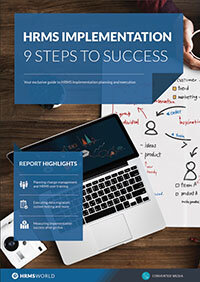
HRMS implementation: 9 steps to success
Get your detailed guide to planning and executing an HRMS implementation
Featured white papers
Related articles
-

A five step guide to assessing your payroll processes
How to review your payroll processes effectively before implementing new software
-

HRMS Training: The Process and The Users
HRMS training will most likely be required by all users, but who are the users? And what is the p...
-

6 security questions you must ask your HRMS vendor
Read our expert's 6 essential questions to ask your HRMS vendor about the security of their system.