
Four do's and don'ts of people analytics
People analytics are no longer a 'bonus' feature. They are a core capability that turns HR data into timely, usable insight for managers and leaders.
The management intelligence, predictive insight, and clearer decision-making that people analytics deliver justify the investment in good HRMS software and disciplined data practices.
This article provides practical do’s and don’ts so your people analytics activity maps directly to business value and responsible data use.
1. DO: track and log people analytics requests
Keep an intake log for every request (scheduled or ad hoc) that captures the requestor, business question, desired outcome, expected value, and delivery time.
Track requests centrally (a lightweight ticketing sheet or your HRMS) and report quarterly on volume, cycle time, and business impact so resourcing and roadmap choices become data-driven.
2. DON'T: accept every request at face value
Always ask “what business decision will this support?” and “how will we measure success?”
Expand your people analytics capabilities with this guide to making the most of your HR data
That simple set of questions avoids report proliferation and surfaces opportunities to automate or build interfaces. If the answer is “because we’ve always had that report,” pause and convert the work into a lean, testable solution (an automated feed, a dashboard widget, or a short-lived pilot).
A real-world example: HR was running a report to trigger credit-card issuance. Replacing the report with a direct, automated feed to the vendor saved time and prevented mistakes.
3. DO: connect and reach out to make people analytics a key information source
Treat your HRMS as the single source of truth for people data, then actively integrate it with payroll, finance, access control, and recruiting systems.
Where technical integration isn’t possible right away, use reconciled feeds and clear ownership rules so data doesn’t drift. Promote a few high-value reports (headcount, new hires, terminations, promotions) to other teams. Visualization layers make sharing safe, simple, and actionable.
4. DON'T: track sensitive data or allow reporting on it without a solid business purpose
Implement a clear data-governance rule: only collect sensitive attributes when a documented business purpose exists, and then apply strict access controls, anonymization, and data-retention limits.
Examples of sensitive attributes include health information, religious affiliation, and granular disability data. If you need to analyze diversity or pay equity, prefer aggregated or pseudonymized metrics, and only grant access on a need‑to‑know basis. Record approvals and review them annually.
The role of machine learning in people analytics
Machine learning can move people analytics from descriptive dashboards to predictive and prescriptive insight (predicting attrition risk or simulating hiring scenarios), but again, this must also be applied with governance.
Validate models for fairness, explainability, and business relevance. Put human review in the loop for high-stakes decisions (promotions, terminations, etc.).
The future of people analytics
Expect more augmented analytics (AI-assisted insights), real-time operational dashboards, and wider adoption of predictive models paired with stronger regulatory and ethical guardrails.
The future is less about more reports and more about faster, usable insight that managers can act on while preserving privacy and fairness.

Free white paper
5 ways HRMS helps you get more out of your HR data
A comprehensive guide to the data analytics capabilities of your HRMS
Featured white papers
-
5 ways HRMS helps you get more out of your HR data
A comprehensive guide to the data analytics capabilities of your HRMS
Download
Related articles
-

Managing overtime with your HRMS
Do you maximize your HRMS in the battle to manage overtime?
-

Six basic HR data security threats in 2026
Read about the most common threats to HR data security and how to combat them.
-
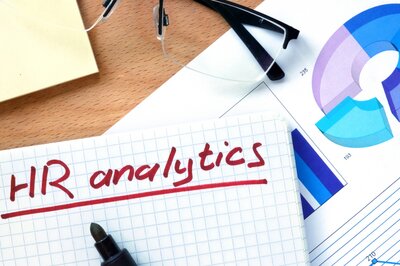
Five HRMS with standout analytics functionality
Some ideal HRMS choices for companies with extensive reporting and analytics needs