
Why change management is the key to HRMS success
Have you ever struggled with something new? Maybe cursed when the latest automatic update leaves your web browser unrecognizable? Or gone shopping for a replacement for an old, worn-out coat and bought nothing because all you wanted was something just like that much-loved old coat? Or perhaps the new album by your favorite band just isn’t as satisfying as their first disc that you bought as a teenager?
Human beings struggle with change.
And stepping into the workplace and the world of HR technology, a new HRMS signifies a big change (or, if it’s the organization’s first HR software, an enormous change).
What is the difference between project and change management?
Now, that’s a good question and the two often go hand in hand. In fact, there are very few projects that don’t require some change management, and dig into most change management efforts and you’ll find a project at the bottom of it somewhere.
A good starting point is to view project management as being focused on tasks, milestones, and activities (the practical and technical issues to actually implementing something new), and change management is focused on the impact of that new thing on employees, how it changes their jobs, how they react, what they need to continue working in the new ‘changed’ workplace.
In HRMS terms, project management is all about finding the right system for the organization’s needs and implementing it, on time. Whereas change management is about ensuring that employees can and do use the system effectively.
In a nutshell, the project sets up the changes, plans and implements them. And change management is necessary to ensure the people are not left behind by the changes. The key to success is that the project management and change management must work together, each influenced and influencing the other.
What role does HR play in change management?
Although HR may well be handling (or joint handling) the project management for a new HRMS, arguably the key role is in change management. That’s often also the case in other projects because change management is focused on people, and HR is the ‘people function’.
The reason for this focus on people lies in how we react when faced with change. The accepted model for describing our responses to a change situation has its roots in the research of Dr. Elisabeth Kübler-Ross, which described a series of distinct emotional phases that people pass through in a change scenario. The below discusses a version of Kübler-Ross’s model (often referred to as the change curve) adapted to the workplace by Ralph Lewis and Chris Parker.
- Shock – the employee realizes that something is changing; a brief period of disorientation and a lack of logical reasoning is normal.
- Minimizing impact – certain user groups may seek to ignore the new HRMS by labeling it an HR issue, nothing to do with them.
- Frustration – the change is accepted but the person still doesn’t like it; feeling hard done to and uninvolved.
- Letting go – at this point, the person is beginning to look forwards and wonder about the change.
- Testing the limits – the training is underway and the person has the opportunity to learn about the system and apply their new knowledge.
- Searching for meaning – with use comes a wider understanding of what the system is offering in terms of benefits.
- Integration – the new HRMS isn’t “new” anymore; it is accepted as the norm.
Thankfully, the very predictability of these responses means that communication and engagement strategies can be formulated to help us through them. Such strategies may include targeted communications, consultation with employee groups, producing and delivering training materials (after all, change is a de-skilling process and HR is responsible for skills and development), and even the recruitment and management of consultants – all very HR-ey activities.
In the context of an HRMS project, HR’s role is likely to include both project and change management. HR is likely to be responsible for:
- Establishing the change agenda (including identifying tasks and milestones).
- Researching the requirements to ensure that the change is the one the organization needs (i.e. it’s the right HRMS).
- Anticipating workforce reactions and what might be needed to ensure that the final outcome is positive.
- Communicating with stakeholders and management.
- Training HRMS users and managers to use the system (i.e. equipping the workforce with skills to make the change a success).
Effective steps to improve change management for HR
If the ‘problem’ is how people respond to change and HR needs to guide them through that process, what is needed is a practical application of the change curve model. And for that, we turn to a different but complementary model; one that is more action-focused.
The ADKAR® model, developed by Prosci®, is a model that identifies specific change management activities, particularly around communication and skills training, that support people through the change experience. A particular benefit is the way in which these activities can be mapped across to the Kübler-Ross curve – taken together, the two models present an almost ready-made change strategy, as follows:
| ADKAR® | Emotional response |
|---|---|
|
Awareness – People need to understand the reasons behind the change. Communicating this information begins early, preferably as part of the stakeholder consultations as part of gathering user requirements prior to selecting the new system. |
Shock and Minimizing impact – Increased awareness of the drivers of change help people accept that the change is happening and won’t ‘go away’. The underlying message is that the coming new HRMS is real and must be dealt with. |
|
Desire – Having accepted the change is happening, employees need to be motivated to make it happen. |
|
|
Knowledge – Using the new HRMS will depend on having the right skills and knowledge – how the system works and what uses it can be put to. |
Letting go and Testing the limits – The training program not only sends a message that you are taking the change (and its impact on employees) seriously but also equips them with the knowledge to make the change a success. The training is an opportunity to get to grips with the new HRMS first-hand and take it for a supervised and guided test drive. |
|
Ability – Training is essential but is usually limited to an acquisition of knowledge. How to apply that knowledge and use the HRMS in practice as a routine part of their jobs, is the next step for employees. |
Searching for meaning – Now employees are beginning to actually use the new HRMS as part of their working lives. It’s still early days but the practical implementation of the system can be seen. |
|
Reinforcement – It’s working and being used by employees – success! However, now you need to embed that success. |
Integration – People are not only using the HRMS but doing so is now the ‘new normal’. The change is integrated and will itself, no doubt, be subject to further change in the future. It never ends… |
As already mentioned, people (that’s all of us!) struggle with change. The bigger the change and the more out of their control it is, the more they struggle. The aim of change management is to support employees through the process of selecting and successfully implementing a new HRMS as smoothly as possible. As such, it’s a role tailor-made for the HR function and one for which HR should be uniquely qualified.

Free white paper
HRMS implementation: 9 steps to success
Get your detailed guide to planning and executing an HRMS implementation
Featured white papers
Related articles
-

A five step guide to assessing your payroll processes
How to review your payroll processes effectively before implementing new software
-
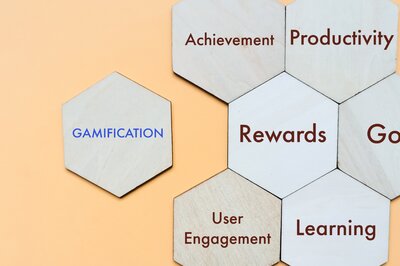
Three gamification ideas to increase HRMS user engagement
HRMS gamification is a good way to engage users with new software - use these ideas to get going
-

HRMS Training: The Process and The Users
HRMS training will most likely be required by all users, but who are the users? And what is the p...